
Parenting
Parenting is an English word, just as catching fish is called “fishing”, the work of parents is called Parenting. The parents’ job is to nurture and raise their children.
Sometimes, parents of newborn infants become distressed, and they start doing many things that negatively affect the child’s mentality and development. They often get confused by the internet, friends’ advice, the competition in the environment, and what is happening around them, leading them to parent their children incorrectly.
Dr Nikhil Gupta has conducted a special study on Parenting and has also authored a book on the subject. Good parenting is essential for a child’s bright future, and Dr Nikhil Gupta can help you in this endeavour.
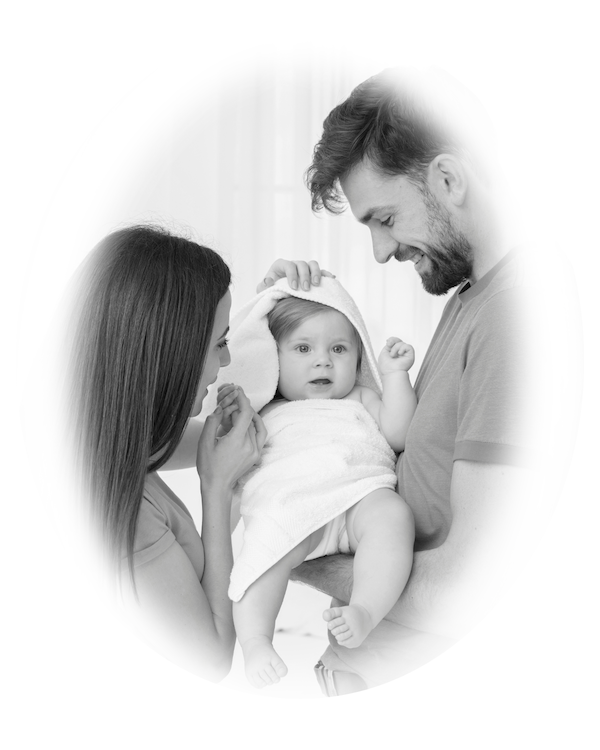
What is Parenting ? from the opening chapter of Dr. Nikhil Gupta's Book - "Parenting".
The activity of raising a child is parenting. It’s simple. It involves caring for the baby so she is safe while enjoying her babyhood. This babyhood is simple and oblivious to the happenings. It will never return to the baby’s or the parents’ life. Every baby brings a bundle of happy moments with her. Parents should not miss those joyful moments of life.
Parenting is about enjoying the tiny little moments of happiness a baby brings. A child gives back happiness when she is happy.
A child is happy when she gets proper food with affection whenever hungry; a child is happy when she gets a soft and warm bed whenever she is sleepy; a child gets happiness if she feels being taken care of when she is sad; a child feels happy when she finds a safe place to roam around to test her skills; a child is happy if she gets an atmosphere of joy and delight when she plays and jumps. These are the tiny little needs of our children. It is the sacred duty of every parent to fulfil these needs with respect. Parenting is a commitment to feel happy while providing for a child.
Parenting doesn’t require a knowledge of rocket science or strategic planning. Simply put, it is all about giving time and focus to the baby, observing her, knowing and supporting her traits. Parenting is all about converging our thinking with the baby’s thinking and moving like a baby with the baby. A baby needs a safe companion—a companion to play with, eat with, sleep with, and share with.
Who else could this be????
Parents – of course.
If you add baby-friendly care to it, it becomes baby care.
Traditional practices play a vital role in parenting. They not only give our children an identity but also provide them with a secure place in the community. Traditions offer mental stability and a sense of security. Traditions are a foundation for tailoring individual baby care. Parenting is all about ensuring our children grow up rooted in their traditions.
With time, traditions change. What is there today was not there about a decade ago. What is today will be called an old tradition shortly. Baby care has become industry-driven today. Scientists test whatever the industry offers. Sometimes, there is a tussle; sometimes, they go hand in hand. Traditions built on thousands of years of experience are questioned. Choices, or we can say confusion, have increased exponentially. Good parenting is all about choosing wisely from the old and the new.
Parenting is not about guiding a baby towards some supernatural existence. It is all about providing a friendly and fertile land for a child to grow. It is like gardening, where a gardener develops good soil for plants to grow while protecting and shielding them against the unpredictable vagaries of nature as the plant grows. Parenting is all about laying a garden where the child can grow and prosper to the best of her potential.
Parenting is not about carpentry or shaping a baby’s personality. It is about recognizing the uniqueness of the baby. It is about accepting that God sends each baby to the earth for a unique purpose. So, every baby is different from any other kid on the planet. They don’t resemble their parents either. So, it is crucial not to expect a child to tread the path their parents have walked. A baby has to grow into an independent adult. Parenting is about facilitating a profoundly dependent baby to grow into a profoundly independent adult.
Children are messy. But tidiness is essential. Parenting is all about clearing the mess happily after the day is over, so the child can create it again the next day. Accepting the creation of a mess by a child as an essential feature of childhood.
Parenting is all about understanding the usual living behaviors of children, which are altogether different from the living norms of grownups. Parenting is not about getting stressed or embarrassed if a child ferociously violates the norms. Parenting is all about recognizing the primary god-gifted lifestyle of a child-like child. Parenting is not about judging a child on societal standards.
Parenting is not about grading a child’s activities. It is about saving your child from the stress of competition and comparison. It is about recognizing the goodness of every baby on the planet and accepting your baby’s peculiarities as good as any other baby’s. Parenting is all about keeping the child clear of competition and comparison.
Human babies have grown and thrived in big families and village-like communities for millions of years. Those traits have not yet vanished. Parenting is all about facilitating kinship in family and community, and facilitating the baby to bond with the ensemble. Your baby has to grow in that milieu.
Big families are breaking up. Nuclear families are in vogue. Even within big families, many nuclei form. Knowledge about baby care and follow-up parenting is sought from sources outside the family. This is one of the reasons you are reading this book. Parenting is all about creating a conducive community around the child to live and thrive in it.
Good parenting is not anything beyond fundamental human nature. It is nature. All the living beings care for their offspring lovingly. All the children crave love along with care. Parenting is all about unconditional love for the child.
One condition can however apply to this unconditional love: correcting the course if a child takes the wrong path. But we should also let the baby learn with cause and effect. If this course correction is too frequent or is always there, it becomes “too much-parenting”. Psychologists call it helicopter parenting or over-protection parenting.
Children who develop with too much parenting grow into less confident adults. They find it difficult to make decisions.
Providing more than a child requires is also overparenting. Too much food creates eating problems, too many toys create a lack of concentration, too many classes, and too much training and teaching overburden the brain and cause fatigue. This leads to underperformance rather than learning more. So, too much is bad. Good parenting is all about being optimal with the child.
In fact, we need not learn or read about parenting. The word parenting was not heard for about thirty years from now. It is the verb of parent. Parenting means the job of a parent. All human or non-human parents brought up their babies. They never had to read about parenting.
Unconditional love, providing the basic needs and setting good examples are the crux.